
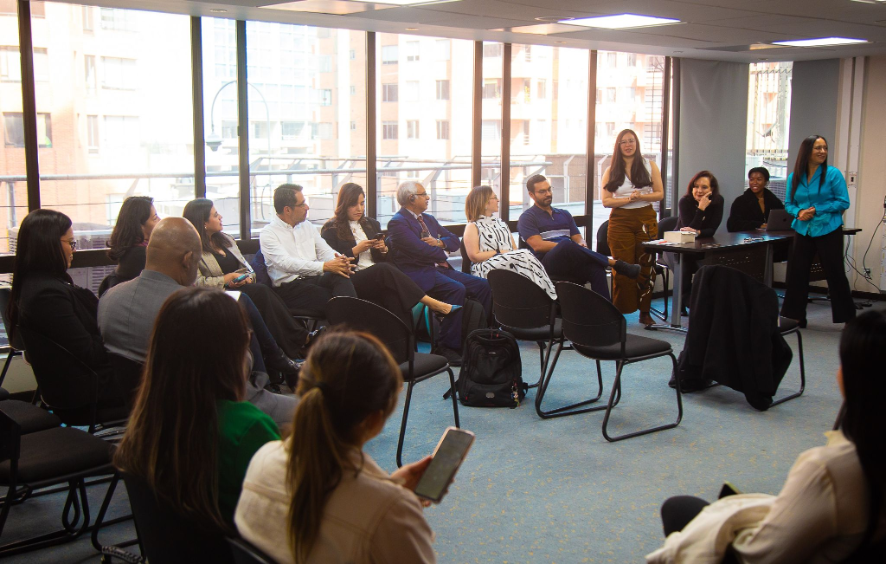
As part of the global commitment to supporting sustainable solutions to antimicrobial resistance (AMR), the International Centre for Antimicrobial Resistance Solutions (ICARS) is advancing the implementation of a project in Colombia focused on reducing the spread of resistant bacteria in high-complexity public hospitals, one of the greatest challenges to global public health.
The project, “Development of a multimodal strategy to decrease and/or limit the spread of carbapenem-resistant Enterobacterales (CRE) in public health institutions in Colombia,” is led by the Antimicrobial Resistance and Hospital Epidemiology Research Group (RAEH) at Universidad El Bosque and has both technical and financial support from ICARS.
The purpose of this initiative is to reduce clinical infections and colonization by CRE in Intensive Care Units (ICUs) of high-complexity public hospitals through the implementation of strategies that strengthen prevention practices, infection control, and the rational use of antibiotics.
To achieve this, the project will be implemented in five high-complexity public hospitals located in Bogotá, Cali, Cartagena, Neiva, and Ibagué, and seeks to generate evidence that contributes to the design of effective and sustainable public policies to address antimicrobial resistance in the country.
In November 2024, the project was officially presented at Colombia’s Ministry of Health and Social Protection (MINSALUD) during a meeting that brought together representatives from national and international institutions. During the event, Dr. Sujith J. Chandy, Director
of ICARS, emphasized the importance of strengthening strategic partnerships with Colombian institutions to tackle the challenges of antimicrobial resistance through applied research and context-adapted solutions.
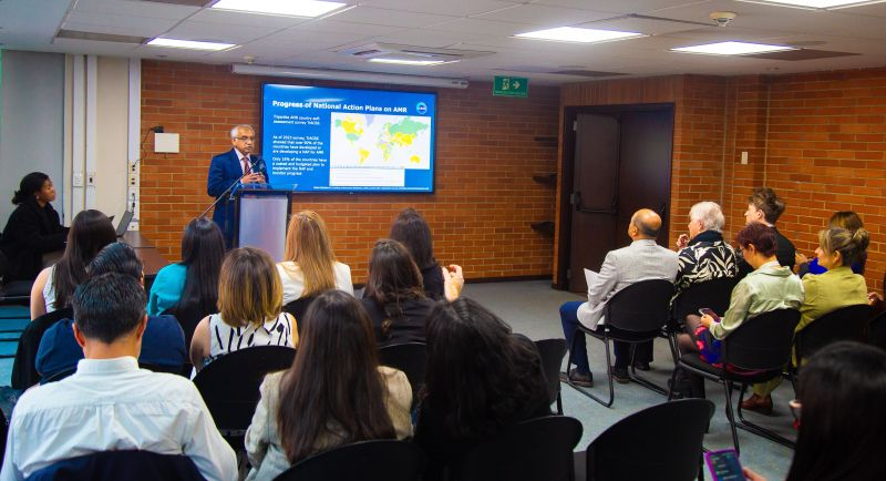
Representatives from the Ministry of Health and Social Protection and the Pan American Health Organization (PAHO) also participated in the session, highlighting the relevance of this type of collaboration to strengthen local capacities, improve infection prevention and control practices in public hospitals, and generate scientific evidence to guide sustainable public policies.
This partnership with Universidad El Bosque makes it possible to advance in supporting partner countries in the search for sustainable and context-appropriate solutions to antimicrobial resistance, promoting scientific cooperation and the exchange of knowledge across regions.